- Turning big ideas into great products
- +234 706 495 6005

- Export License No.RN 0003919
-
Opening HoursMON-SAT 8AM-6PM
- Call Us+234 706 495 6005
HOW TO IMPORT CARS FROM USA TO NIGERIA: COMPLETE STEP BY STEP GUIDE
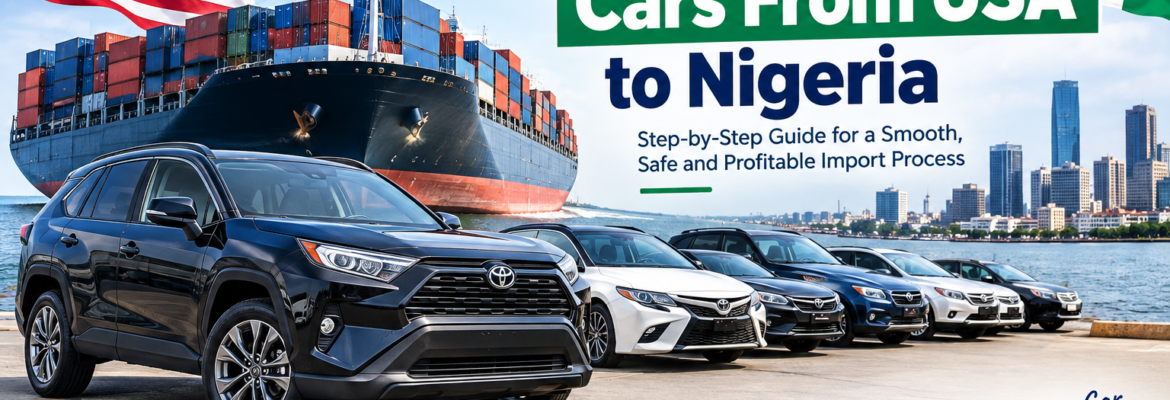
How to Import Cars From USA to Nigeria: Complete Step-by-Step Guide
Learning how to import cars from USA to Nigeria can give you access to a large international vehicle market and can also provide an opportunity to build a vehicle sourcing or car importation business.
However, importing a vehicle from America to Nigeria involves much more than finding a cheap car online. You need to research the Nigerian market, choose the right vehicle, verify its history, calculate your complete landed cost, arrange transportation and shipping, handle the required import documentation, clear the vehicle and prepare it for use or resale.
If you are considering starting a car importation business in Nigeria, understanding each stage before spending your money is particularly important. A mistake in vehicle selection, shipping, customs planning or repair estimation can significantly reduce your expected margin.
In this guide, I will explain how to import cars from USA to Nigeria step by step, from finding a vehicle in America to shipping it to Nigeria, clearing it and preparing it for the Nigerian market.
Important: Customs procedures, tariffs, valuation methods, exchange rates, shipping charges and other import-related costs can change. Always verify the applicable requirements and costs before purchasing a vehicle.
Quick Answer: How to Import Cars From USA to Nigeria
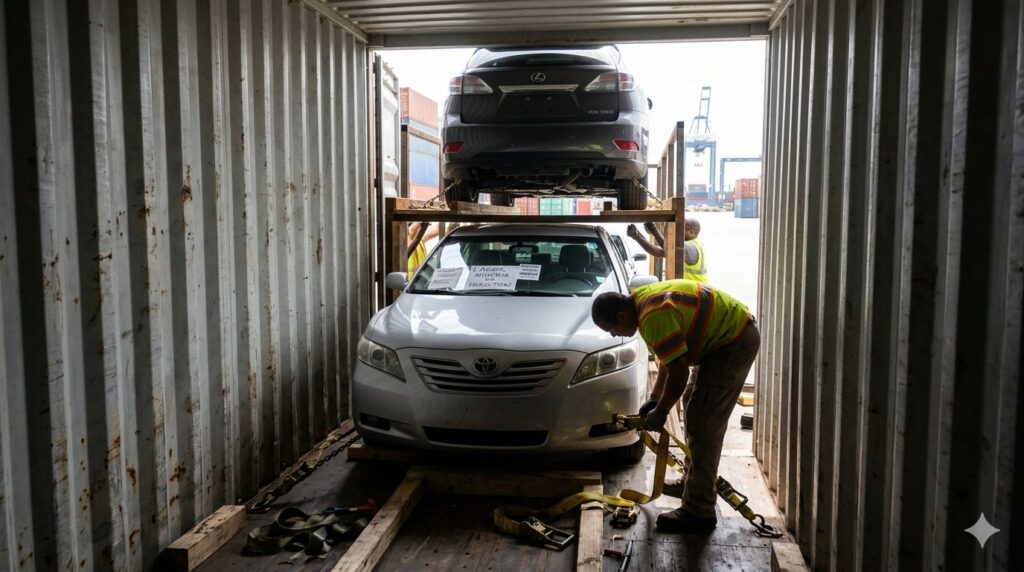
The basic process involves these steps:
- Research the Nigerian car market.
- Choose the type of vehicle you want to import.
- Find a reliable US vehicle source or auction.
- Check the vehicle’s VIN and history.
- Calculate the complete landed cost.
- Set your maximum buying price.
- Purchase the vehicle.
- Arrange transportation to the US port.
- Prepare the required export and shipping documents.
- Choose a suitable shipping method.
- Ship the vehicle to Nigeria.
- Prepare for Nigerian customs clearance.
- Pay applicable customs and port-related charges.
- Clear and take delivery of the vehicle.
- Inspect and repair the vehicle.
- Register, market or sell the vehicle.
The most important rule is simple:
Do not buy the car first and calculate the total cost later. Calculate your expected landed cost before you buy.
Why Import Cars From the USA to Nigeria?
The United States has a large automobile market with a wide range of makes, models and vehicle conditions.
Depending on your budget and business model, you may find:
- Used cars
- SUVs
- Pickup trucks
- Luxury vehicles
- Family vehicles
- Electric vehicles
- Accident-damaged vehicles
- Clean-title vehicles
- Relatively recent models
- Vehicles sold through auctions
- Vehicles sold by dealerships
- Vehicles sold by private sellers
This variety is one reason people interested in how to import cars from USA to Nigeria often consider the American market.
However, availability alone does not make a particular vehicle a good import.
The vehicle must still make financial sense after the purchase price, auction fees, transportation, shipping, customs-related costs, repairs and other expenses are considered.
Is Importing Cars From USA to Nigeria Profitable?
It can be profitable, but there is no automatic profit in car importation.
Your potential result depends on factors such as:
- Purchase price
- Auction or dealer fees
- Exchange rate
- Inland transportation
- Shipping cost
- Customs-related costs
- Port and clearing expenses
- Repair costs
- Vehicle demand in Nigeria
- Final selling price
- How long the vehicle takes to sell
This is particularly important if you are importing vehicles for resale.
A car that appears cheap at a US auction may become expensive after all the additional costs are added.
For example, buying a car for $8,000 does not mean your total investment is $8,000.
You may also have to pay auction fees, inland transportation, shipping, customs-related charges, repairs, clearing expenses and other costs.
Your business calculation should therefore be based on the total landed cost, not the vehicle purchase price alone.
Step 1: Research the Nigerian Car Market Before Buying
One of the biggest mistakes beginners make is starting with the US auction instead of starting with the Nigerian market.
Before you begin searching for vehicles in America, find out what Nigerian buyers are actually looking for.
Research:
- Popular vehicle models
- Current asking prices
- Typical buyer budgets
- Fuel economy
- Spare-parts availability
- Maintenance requirements
- Demand for different body types
- Demand in your target city
- Competition from local dealers
- Prices of comparable vehicles
If you are importing for resale, you should know approximately what similar vehicles are selling for in Nigeria before you place a bid.
Start With the Expected Selling Price
A useful approach is to work backwards.
Instead of asking:
“How cheaply can I buy this car?”
Ask:
“If I import this car, what realistic price can I sell it for in Nigeria?”
Then work backwards to determine how much you can afford to spend on acquiring and importing the vehicle.
This helps prevent emotional buying.
Step 2: Decide What Type of Vehicle You Want to Import
Once you understand the market, decide what type of vehicle you want.
Possible options include:
- Sedans
- SUVs
- Crossovers
- Pickup trucks
- Minivans
- Luxury vehicles
- Electric vehicles
- Commercial vehicles
Your choice should depend on your intended customer and available budget.
If you are importing for personal use, your decision may be based primarily on your needs and preferences.
If you are importing for resale, however, you need to think commercially.
Consider:
Purchase cost + importation cost + repair cost + expected selling price + expected time to sell.
A vehicle with a slightly higher purchase price may sometimes make more financial sense than a very cheap vehicle that requires extensive repairs.
Step 3: Find a Reliable Vehicle Source in the USA
When learning how to import cars from USA to Nigeria, you need to understand where the vehicle will come from.
You may source vehicles through:
US Auto Auctions
Auto auctions are a popular source for vehicle importers.
Depending on the auction and available inventory, you may find:
- Used vehicles
- Insurance vehicles
- Dealer vehicles
- Repossessed vehicles
- Accident-damaged vehicles
- Clean-title vehicles
- Vehicles with different levels of damage
Auction prices can sometimes appear attractive, but the displayed bid or winning price may not represent your total purchase cost.
You may still have buyer fees, auction fees, transportation costs and other charges.
US Dealerships
Another option is buying from a dealership.
The purchase price may be higher than some auction vehicles, but you may have access to vehicles with different histories and conditions.
Private Sellers
Private sellers are another possible source, although you should take additional care with verification, payment and documentation.
Whatever source you choose, verify the seller and vehicle before sending money.
Step 4: Check the Vehicle Identification Number (VIN)
The VIN, or Vehicle Identification Number, is one of the most important pieces of information when buying a vehicle from the USA.
The VIN identifies the specific vehicle.
Before purchasing, investigate available information about:
- Previous damage
- Title status
- Mileage
- Accident history
- Theft records
- Flood damage
- Previous ownership information where available
- Auction history
- Reported condition
Do not rely solely on photographs.
A vehicle can look attractive in auction photographs while having serious mechanical, electrical or structural problems.
Step 5: Pay Particular Attention to Flood-Damaged Vehicles
Flood-damaged vehicles require special caution.
Water damage can affect:
- Engine components
- Transmission
- Electrical systems
- Wiring
- Sensors
- Airbags
- Computer modules
- Interior components
- Electronic systems
Some problems may not become obvious immediately.
A vehicle that looks like an inexpensive repair project can become extremely expensive after it arrives in Nigeria.
If you are not experienced in assessing flood damage, consider obtaining professional advice before purchasing.
Step 6: Understand Accident Damage Before You Bid
Accident-damaged vehicles can sometimes have lower purchase prices.
However, you need to understand exactly what you are buying.
Look carefully at:
- Front-end damage
- Rear-end damage
- Side damage
- Chassis or frame damage
- Suspension damage
- Engine damage
- Transmission damage
- Airbag deployment
- Electrical damage
- Missing components
Also estimate the cost of parts and labour in Nigeria.
Low Purchase Price Does Not Mean Low Total Cost
Suppose Vehicle A costs $7,000 but requires $5,000 in repairs.
Vehicle B costs $9,000 but requires only $1,500 in repairs.
Vehicle B could ultimately cost less to prepare for resale.
This is why landed cost and total preparation cost are more useful than the auction price alone.
Step 7: Calculate the Total Landed Cost Before You Buy
This is one of the most important steps in the entire process.
Before purchasing a car from the USA, create a complete cost estimate.
A useful formula is:
Total Landed Cost = Purchase Price + Auction Fees + Inland Transport + Export Costs + Shipping + Customs/Import Charges + Port/Clearing Costs + Repairs + Other Expenses
You should also consider:
- Bank charges
- Exchange-rate differences
- Storage
- Documentation
- Local transportation
- Detailing
- Replacement parts
- Registration-related expenses
- Unexpected repairs
Example of a Landed-Cost Calculation
Consider this hypothetical example:
| Cost | Example Amount |
| Vehicle purchase | $8,000 |
| Auction fees | $1,000 |
| US inland transportation | $700 |
| Shipping | $1,500 |
| Customs/import-related costs | $4,000 |
| Port/clearing expenses | $500 |
| Repairs | $1,500 |
| Estimated total | $17,200 |
These figures are purely illustrative. They are not a quotation or current fixed rate.
The actual cost of importing a particular vehicle to Nigeria can be significantly different.
The purpose of this example is to demonstrate why you should calculate your complete cost before buying.
Step 8: Convert Your Costs Into Naira
If you are buying the vehicle in US dollars but selling it in Nigeria, exchange-rate movements can affect your final result.
Your cost sheet should record:
- Dollar expenses
- Naira expenses
- Exchange rate used
- Date of payment
- Actual amount paid
This is particularly important for businesses importing multiple vehicles.
It allows you to see your actual investment rather than relying on rough estimates.
Step 9: Set Your Maximum Auction Bid
After calculating your estimated landed cost, determine the maximum amount you are prepared to pay for the vehicle.
For example, consider:
- Expected Nigerian selling price
- Estimated importation expenses
- Estimated repair expenses
- Desired gross margin
- Contingency for unexpected costs
Your maximum vehicle acquisition budget must leave enough room for the other expenses.
Set Your Maximum Bid Before the Auction
Do not keep increasing your bid simply because you have already spent time researching the vehicle.
If the bidding goes beyond your calculated limit, walk away and look for another vehicle.
There will always be another car.
Step 10: Purchase the Vehicle and Keep Your Records
Once you have determined your maximum acceptable price, you can proceed with the purchase.
Keep copies of:
- Purchase confirmation
- Invoice
- Payment receipt
- Vehicle VIN
- Title information
- Auction documentation
- Seller information
- Purchase correspondence
Good documentation becomes increasingly important as your car business grows.
Step 11: Arrange Transportation to the US Port
The vehicle usually needs to be moved from its purchase location to the port from which it will be exported.
Transportation costs can depend on:
- Distance
- Vehicle location
- Vehicle condition
- Whether the vehicle is running
- Transport availability
- Type of carrier required
A non-running vehicle may require additional equipment.
Therefore, check the vehicle’s location and operational condition before bidding.
Step 12: Choose Between RoRo and Container Shipping
When you research how to import cars from USA to Nigeria, you will encounter two major shipping options: RoRo and container shipping.
What Is RoRo Shipping?
RoRo means Roll-on/Roll-off.
Vehicles are loaded onto a vessel designed to carry wheeled cargo.
RoRo may be suitable for standard vehicles that can be handled through the carrier’s normal process.
Potential advantages include:
- Straightforward vehicle shipping
- No dedicated container required
- Vessels specifically designed for wheeled cargo
Availability and pricing depend on the route, carrier and shipping schedule.
What Is Container Shipping?
With container shipping, the vehicle is loaded into a shipping container.
Container shipping may be considered when:
- Shipping multiple vehicles
- The particular vehicle is unsuitable for the available RoRo service
- A container arrangement offers a suitable logistics solution
- The importer has another legitimate reason for using a container
The cheapest method is not necessarily the cheapest for every shipment.
Compare the complete shipping and handling cost before deciding.
Step 13: Prepare the Vehicle Export Documents
Before the vehicle leaves the USA, ensure that the required export and shipping documents are properly handled.
Depending on the transaction and shipping arrangement, these may include:
- Vehicle title
- Bill of sale
- Purchase invoice
- Export documentation
- Shipping instructions
- Bill of Lading
- Other documents required by the carrier or relevant authorities
Your freight forwarder or export partner should advise you about the documentation required for your particular shipment.
Do not simply assume that someone else has completed every document.
Ask for confirmation.
Step 14: Book the Vehicle for Shipment to Nigeria
Once the vehicle is ready, arrange shipping with your freight forwarder or shipping company.
You should receive information concerning:
- Port of loading
- Vessel
- Sailing date
- Estimated departure
- Estimated arrival
- Destination
- Booking information
- Shipping charges
- Required documents
Keep these records together with your vehicle purchase documents.
Step 15: Track Your Shipment
Once the vehicle has been shipped, monitor the shipment.
Do not assume that the original estimated arrival date is guaranteed.
Shipping schedules can be affected by:
- Vessel delays
- Port operations
- Weather
- Transshipment
- Documentation issues
- Operational changes
- Other logistics factors
Maintain communication with your shipping provider throughout the journey.
Step 16: Prepare for Nigerian Customs Clearance
When the vehicle arrives in Nigeria, you need to complete the applicable customs and port-clearance procedures.
The Nigeria Customs Service identifies procedures and documents including Form M, the Pre-Arrival Assessment Report (PAAR), and the Single Goods Declaration (SGD) within the import process. The SGD contains information concerning imported goods, including their description, value and country of origin.
The precise requirements applicable to a particular vehicle should be confirmed at the time of importation.
Work With a Licensed Customs Agent
If you are importing your first vehicle, a properly licensed customs agent can help you navigate the clearance process.
A customs agent may assist with:
- Customs documentation
- Declarations
- Assessment
- Duty processing
- Port procedures
- Communication
- Clearance
The Nigeria Customs Service provides a framework for licensing and regulating customs agents involved in customs clearance and related import and export activities.
However, you should still understand your own numbers.
Ask your agent for a clear breakdown of the costs instead of accepting one unexplained figure.
Step 17: Understand Customs Valuation and Import Charges
Customs valuation is an important part of importing vehicles into Nigeria.
Do not assume that your customs cost will simply be calculated by taking your auction purchase price and applying one fixed percentage.
Applicable assessment can involve tariff classification, valuation rules and other factors.
The Nigeria Customs Service states that customs valuation operates under the applicable Nigerian legal and tariff framework and relevant customs valuation principles.
Avoid Using Outdated Customs Figures
One common mistake among new importers is relying on an old YouTube video, blog post or social media message claiming:
“This is the current duty for this type of car.”
That information may no longer be accurate.
Tariff classifications, valuation practices, exchange rates, government policies and other costs can change.
Always verify the applicable information for the vehicle you are importing.
Step 18: Pay the Applicable Charges and Clear the Vehicle
Once the applicable customs and port procedures have been completed and required charges have been paid, the vehicle can proceed through the applicable release process.
Your expenses may include more than customs duty.
Depending on the transaction, you may also encounter costs relating to:
- Port handling
- Clearing services
- Documentation
- Storage
- Transportation
- Other applicable charges
Keep receipts and records for every payment.
Step 19: Inspect the Vehicle After Arrival
When you receive the vehicle, inspect it carefully.
Check:
- VIN
- Engine
- Transmission
- Mileage
- Body condition
- Interior
- Electrical systems
- Air conditioning
- Lights
- Suspension
- Brakes
- Tyres
- Airbags
- Infotainment
- Battery
If you imported an accident-damaged vehicle, have a competent technician inspect the repairs before putting it up for sale.
Step 20: Repair and Prepare the Vehicle for the Nigerian Market
If you are importing the car for resale, prepare it properly.
This can involve:
- Mechanical repairs
- Bodywork
- Painting
- Replacement parts
- Electrical repairs
- Air-conditioning repairs
- Wheel alignment
- Tyres
- Battery
- Interior cleaning
- Exterior detailing
Prioritize safety and mechanical reliability before cosmetic improvements.
Step 21: Calculate Your Actual Profit
After the major expenses have been paid, calculate your actual cost.
Use:
Gross Profit = Selling Price − Total Vehicle Cost
For example:
Selling price: ₦25,000,000
Total cost: ₦21,500,000
Estimated gross profit: ₦3,500,000
This is not necessarily your final net profit.
You may still have:
- Advertising expenses
- Sales commissions
- Office expenses
- Financing costs
- Additional repairs
- Storage
- Transportation
- Negotiation discounts
The more accurately you track your expenses, the better you can understand the performance of your car importation business in Nigeria.
How Much Does It Cost to Import a Car From USA to Nigeria?
There is no single fixed price that applies to every vehicle.
The total cost can vary according to:
- Vehicle purchase price
- Vehicle location in the USA
- Auction fees
- Transportation to port
- Shipping method
- Shipping route
- Exchange rate
- Customs assessment
- Port charges
- Clearing costs
- Repairs
- Storage
- Other expenses
A useful budgeting structure is:
| Cost category | What to include |
| Purchase | Vehicle price |
| Acquisition | Auction/dealer fees |
| US logistics | Inland transportation |
| Export | Export/documentation costs |
| Shipping | Freight and related charges |
| Nigeria importation | Applicable customs/import costs |
| Port | Applicable port/handling expenses |
| Clearing | Customs-agent/clearance expenses |
| Repairs | Mechanical/body/electrical repairs |
| Local logistics | Transportation after release |
| Preparation | Detailing and other preparation |
| Contingency | Unexpected expenses |
The total is the figure you should use when deciding whether the vehicle makes financial sense.
How to Import Cars From USA to Nigeria With Little Capital
Many people assume they need a large car lot and substantial inventory capital before entering the automobile business.
That is not necessarily the only model.
One possible approach is to operate as a vehicle sourcing agent or car broker.
Instead of purchasing several vehicles with your own money, you can work with customers who already have a budget and are looking for specific vehicles.
The process can look like this:
- Find a potential customer.
- Understand the customer’s budget.
- Identify the desired vehicle.
- Search for suitable vehicles in the USA.
- Verify the vehicle.
- Calculate the estimated landed cost.
- Present the vehicle and cost structure.
- Agree on your sourcing or service arrangement.
- Coordinate the purchase and importation.
- Earn your agreed fee or margin.
This approach can reduce the amount of inventory capital required.
However, “starting with little capital” does not mean starting with literally zero expenses.
You still need resources for communication, research, marketing, professional services and other operating costs.
How to Start a Car Importation Business in Nigeria Online
You can also build a vehicle-sourcing business online without immediately maintaining a large physical showroom.
Online channels can help you:
- Find customers
- Display vehicles
- Advertise sourcing services
- Communicate with US suppliers
- Research vehicle prices
- Compare vehicles
- Share inspection information
- Generate leads
- Build your reputation
Social media can be used to showcase:
- Available vehicles
- Imported vehicles
- Before-and-after repairs
- Customer deliveries
- Vehicle sourcing processes
- Educational content
- Vehicle comparisons
However, online marketing should be supported by accurate information.
Avoid advertising a vehicle at a price that excludes major costs without clearly explaining what the advertised price represents.
How Do Car Dealers Make Money Without Owning Every Car?
This is an important concept for people entering the automobile business.
A dealer or broker does not necessarily have to own every vehicle shown to customers.
Possible business models include:
- Commission sales
- Vehicle brokerage
- Customer sourcing
- Consignment arrangements
- Vehicle sourcing services
For example, a vehicle owner may want to sell a car but does not want to handle marketing and customer negotiations.
A dealer or broker may find the buyer and earn an agreed commission.
This can reduce the amount of capital required to maintain inventory.
However, the arrangement should be clearly documented between the parties.
Common Mistakes When Importing Cars From USA to Nigeria
Buying Based Only on the Auction Price
A low purchase price does not guarantee a profitable import.
Failing to Check the VIN
Vehicle history can reveal information that photographs do not.
Ignoring the Vehicle’s Location
Long-distance transportation to the port can add significant cost.
Underestimating Repair Expenses
This is particularly dangerous with damaged vehicles.
Forgetting Exchange-Rate Risk
A change in the dollar-to-naira exchange rate can affect your total cost.
Using Outdated Customs Information
Always verify current requirements.
Choosing a Vehicle Without Checking Nigerian Demand
A vehicle that is difficult to sell can tie up your money.
Failing to Budget for Unexpected Expenses
Leave room for costs that were not included in your original estimate.
Trusting Unverified Middlemen
Verify your sourcing partners, shipping providers, customs agents and other service providers.
Calculating Profit Before the Vehicle Is Ready
Your real cost is not known until the relevant purchase, shipping, clearance and preparation expenses have been accounted for.
USA Auto Auctions: What Nigerian Importers Should Know
US auto auctions can provide access to a wide range of vehicles.
However, beginners should understand that auction photographs and basic vehicle descriptions do not always tell the complete story.
Before bidding, look carefully at:
- Damage photographs
- VIN information
- Title status
- Mileage
- Vehicle location
- Run-and-drive status where provided
- Airbag condition
- Missing parts
- Undercarriage information where available
- Previous auction records where available
If you are inexperienced, consider working with someone who understands vehicle auctions and can help interpret the available information.
Where Do Nigerians Import Cars From?
The USA is an important source of imported vehicles for the Nigerian market, particularly for used and Tokunbo vehicles.
However, Nigeria imports vehicles from several international markets.
Depending on the vehicle category and business model, importers may consider:
- USA
- Canada
- China
- Other international markets
The most suitable source depends on what you are trying to buy.
For example, an importer looking for a used Toyota or Lexus may have different sourcing considerations from someone looking for a new Chinese vehicle or electric vehicle.
There is therefore no single country that is automatically the best source for every Nigerian importer.
USA vs China for Car Importation to Nigeria
China has become increasingly relevant to the global automobile market, particularly in newer vehicle categories.
The USA remains an important source of used vehicles, while China can be relevant for new vehicles and certain newer technologies.
The choice should depend on:
- Vehicle type
- Purchase price
- Shipping cost
- Availability
- Parts
- Warranty
- Nigerian customer demand
- Importation requirements
- Expected resale value
Your business model should determine your sourcing market rather than simply following a trend.
How Long Does It Take to Import a Car From USA to Nigeria?
There is no fixed number of days that applies to every shipment.
The overall timeline can be affected by:
- Vehicle purchase
- Title processing
- Inland transportation
- Export documentation
- Port booking
- Vessel availability
- Shipping
- Transshipment
- Port operations
- Customs clearance
- Repairs
If you are importing a vehicle for a customer, avoid promising an exact delivery date unless your logistics providers have confirmed the relevant schedule.
What Documents Are Needed to Import a Car From USA to Nigeria?
The precise documents can vary depending on the transaction and current requirements.
Your import file may include:
- Vehicle title
- Bill of sale
- Purchase invoice
- Auction documentation
- Export documentation
- Shipping documents
- Bill of Lading
- Customs/import documentation
- Other documents requested by relevant authorities or service providers
Keep organized records throughout the transaction.
Frequently Asked Questions About Importing Cars From USA to Nigeria
Can I import a car from the USA directly to Nigeria?
Yes. Vehicles can be purchased in the USA and shipped to Nigeria, subject to applicable export, shipping and Nigerian import requirements.
How much does it cost to import a car from USA to Nigeria?
There is no fixed amount. The total depends on the vehicle price, auction fees, transportation, shipping, customs-related costs, port charges, repairs and other expenses.
What is the cheapest way to import a car from the USA?
There is no single method that is always cheapest. Compare the complete cost of purchasing, transporting, shipping and clearing the vehicle.
Can I buy cars from US auctions and import them to Nigeria?
Yes. US auctions are one potential source of vehicles, but you should investigate the vehicle’s condition, title, history, fees and transportation costs before bidding.
Can I import accident-damaged cars from the USA?
Yes, but you should carefully assess the damage and calculate repair costs before buying.
How do I calculate the profit on an imported car?
Subtract your complete vehicle acquisition, importation and preparation costs from the realistic selling price.
Estimated Gross Profit = Selling Price − Total Cost
Do I need a customs agent to import a car?
A customs agent can assist with customs clearance and related documentation. If you use one, verify that the agent is properly licensed and ask for a clear breakdown of charges.
How long does it take to ship a car from the USA to Nigeria?
The shipping timeline varies depending on the origin, destination, carrier, sailing schedule and other logistics factors.
Can I start importing cars from the USA with little money?
You may be able to enter the wider automobile business with less inventory capital by operating as a vehicle sourcing agent, broker or commission-based seller. Importing and owning inventory yourself requires sufficient funds to cover the vehicle and associated costs.
Is car importation profitable in Nigeria?
Car importation can be profitable, but profitability depends on the vehicle, total landed cost, market demand, selling price and other expenses. Each vehicle should be evaluated individually.
Final Checklist Before Importing a Car From USA to Nigeria
Before paying for a vehicle, ask yourself:
Vehicle
- Have I checked the VIN?
- Do I understand the vehicle’s history?
- Do I understand the damage?
- Have I checked the title status?
- Is the mileage believable?
- Have I considered flood damage?
Financial
- What is my maximum purchase price?
- What are the auction fees?
- What will inland transportation cost?
- What will shipping cost?
- What are my estimated customs-related costs?
- What will repairs cost?
- What is my total landed cost?
- What is the realistic Nigerian selling price?
Shipping
- Which US port will the vehicle leave from?
- Will I use RoRo or container shipping?
- Who is handling the export?
- What documents are required?
- What is the expected shipping schedule?
Nigeria
- Who will handle customs clearance?
- Have I verified the current import requirements?
- Have I budgeted for port and clearing expenses?
- Where will the vehicle be repaired?
- What will it cost to prepare it for sale?
Business
- Is there genuine demand for this vehicle?
- What are competing vehicles selling for?
- What is my expected gross margin?
- How long could my money remain tied up?
- What happens if the vehicle costs more to repair than expected?
If you cannot answer these questions, you may not yet have enough information to purchase the vehicle.
Final Thoughts: Don’t Just Import Cars — Import Profitably
Knowing how to import cars from USA to Nigeria is only one part of building a successful automobile business.
The real skill is learning how to evaluate a vehicle before you spend your money.
You need to understand:
What am I buying?
What is the real condition of the vehicle?
How much will it cost me by the time it reaches Nigeria?
How much will repairs cost?
What can I realistically sell it for?
How long might it take to sell?
When you answer these questions before buying, you reduce the risk of making expensive decisions based only on an attractive auction price.
Whether you want to import one Tokunbo car for yourself, become a vehicle sourcing agent, or build a full car importation business in Nigeria, start with proper research, accurate cost calculations and reliable business relationships.
The goal is not simply to buy cars cheaply in America.
The goal is to source the right vehicle, control your costs, manage the importation process properly and create value in the Nigerian market.
Need Help Importing Cars From the USA to Nigeria?
If you are planning your first vehicle import or looking to build a car business in Nigeria, professional guidance can help you evaluate the process before committing your money.
Our vehicle sourcing and importation support can include:
- Vehicle sourcing
- Personalized vehicle searches
- Vehicle evaluation
- Importation guidance
- Landed-cost analysis
- Auction purchase support
- Shipping coordination
- Importation advisory
- Vehicle sourcing consultancy
- Car dealership consulting
If you are serious about entering the automobile business, getting your numbers right before buying the vehicle can make a significant difference to your overall business outcome.
Car Import Consultant & Vehicle Sourcing Specialist
Related Guide
If you want to understand the wider business opportunity beyond importing a single vehicle, read our complete guide:
Car Importation Business in Nigeria: How to Start, Import Cars and Make Money Selling Cars